
Overview
How this service fits Houston-area turf projects.
Artificial turf is low-maintenance, not no-maintenance. East Houston homeowners and commercial property managers who understand that distinction get significantly more years out of their installations than those who treat synthetic turf like a set-and-forget surface. The east-side climate makes maintenance more important, not less — the combination of Ship Channel humidity, seasonal Gulf storms, East Houston clay soil behavior, and the extended high-temperature season from May through October creates conditions that affect turf performance over time.
Turf Installation of Houston provides professional maintenance service for artificial turf installations across the East End corridor — residential yards in Lawndale and Pecan Park, commercial properties along the East Freeway, apartment complexes in Galena Park, and any other synthetic turf surface in the east-side service area. Our maintenance visits are structured to address the specific degradation patterns this climate creates, not a generic checklist written for Arizona or California conditions.
What actually happens to artificial turf in East Houston over time? Fiber compaction in high-traffic zones — the path your kids run to the gate, the spot your dog makes laps, the entry walk at your business. Infill displacement from heavy rainfall events and power washing that shifts the aggregate away from where it needs to be. Organic debris accumulation from the mature oaks and pecans common in East End neighborhoods, which breaks down and can block drainage. Seam stress from the expansion and contraction cycles of Houston's temperature swings. And in pet areas, the gradual saturation of infill with compounds that degrade odor-neutralizing properties.
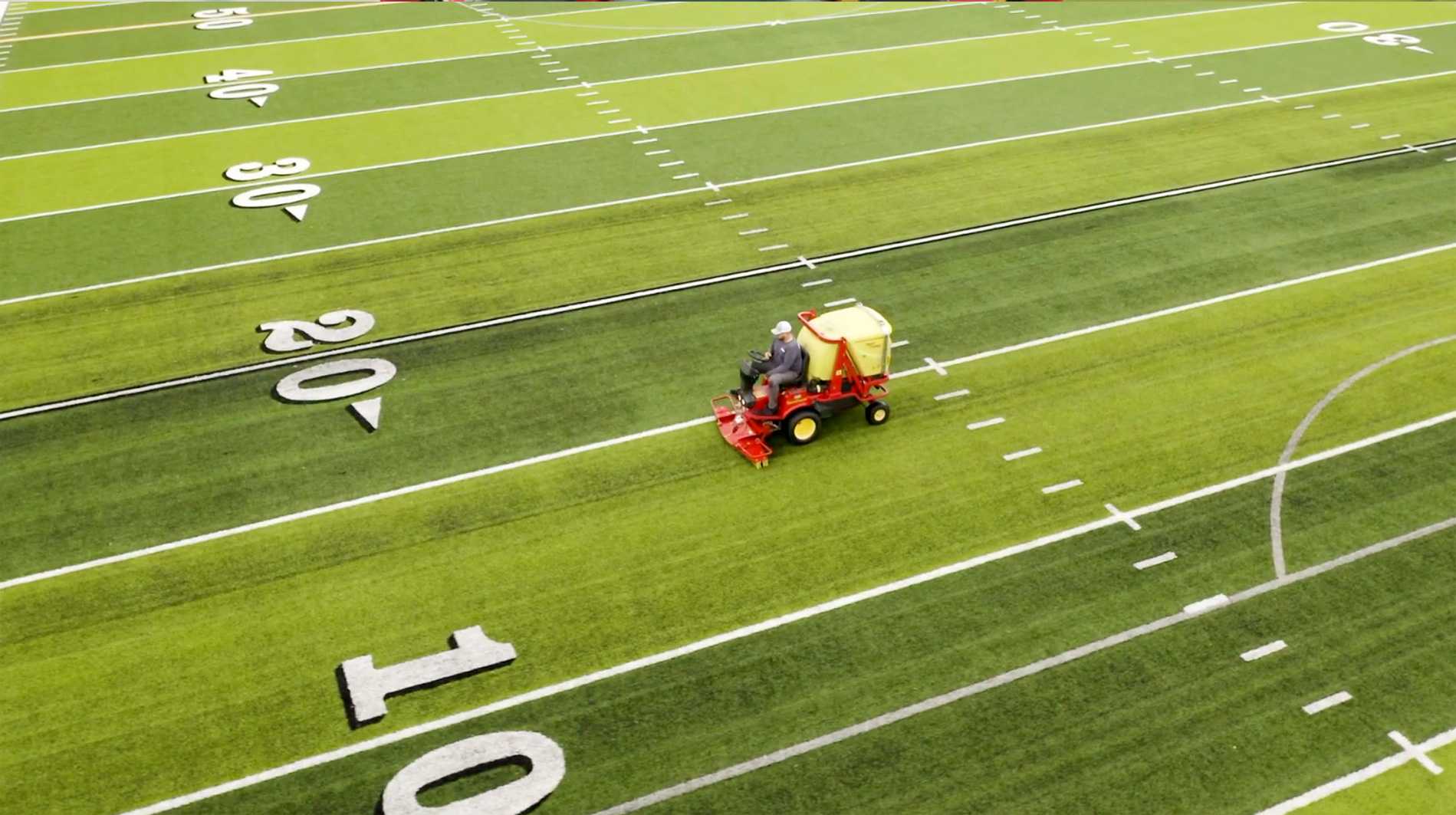
Professional maintenance addresses all of these. We groom fibers back to upright position, redistribute and replenish infill, clear drainage paths, inspect seams and edges, and in pet areas apply enzyme treatments and antimicrobial applications that reset odor control. The result is a turf surface that performs the way it did in year one rather than drifting toward the flat, compacted, drainage-compromised condition that makes homeowners think they need to replace something they could have maintained.
For Pasadena and East Houston commercial properties, maintenance also protects the professional appearance that commercial turf is installed to deliver. A neglected commercial turf installation starts looking like neglect within a couple of years. Regular maintenance keeps it looking like an intentional, well-kept surface.
What the work includes
- East-side climate-specific service: Maintenance protocols built around East Houston's clay soil behavior, Gulf humidity, heavy rainfall events, and extended heat season — not a generic checklist.
- Fiber grooming and compaction reversal: Power brooming restores fiber upright position in high-traffic zones, reversing the matted, flat appearance that develops in paths and pet areas over time.
- Infill redistribution and replenishment: Infill displaced by rainfall, foot traffic, or power washing is redistributed to proper depth and concentration, restoring cushioning and drainage performance.
- Debris clearing for East End trees: Organic debris from oak, pecan, and other mature trees common in Eastwood, Lawndale, and Idylwood can block turf drainage. We clear it thoroughly without damaging the fiber.
- Seam and edge inspection: Proactive examination catches seam stress, edge lifting, and perimeter anchor failures before they become visible damage or safety issues.
- Pet area enzyme and antimicrobial treatment: For households in Pasadena and the East End with dogs, we apply specialized treatments that reset odor-neutralizing capacity and maintain antimicrobial protection.
- Drainage flow verification: We test drainage performance after maintenance to confirm water moves through the system at the rate it should — critical for east-side properties sitting on clay soil.
- Documented service records: Each maintenance visit is documented for warranty compliance and provides a record of condition over time — useful if you plan to sell the property or file a warranty claim.
Installation and project process
- Step 1
Surface Condition Assessment
The maintenance visit starts with a full evaluation of the turf surface — fiber condition, infill distribution and depth, drainage performance, seam integrity, edge security, and any developing problems in pet areas or high-traffic zones. We note what we see before we start working.
- Step 2
Debris Removal and Surface Clearing
Leaves, organic debris, dust, and loose material are removed from the surface. In East End and Eastwood yards with mature tree canopy, this step can involve significant debris accumulation, particularly after fall leaf drop or after Gulf storm systems move through.
- Step 3
Power Brooming and Fiber Restoration
We run professional-grade power brooms over the turf to restore fiber upright position, break up compacted zones in high-traffic areas, and distribute infill that has migrated to low-traffic margins of the surface.
- Step 4
Infill Measurement and Replenishment
We measure infill depth at multiple points, identify areas with displacement or compaction, and add infill where needed to restore proper depth. Infill type is matched to what was originally installed — we don't mix incompatible materials.
- Step 5
Seam, Edge, and Drainage Inspection
All seams are checked for lifting or separation. Perimeter edges are confirmed secure. We test drainage flow rate by observation and water application to confirm the system is moving water at appropriate speed. Problem areas are documented and flagged.
- Step 6
Treatment Application and Service Report
Applicable treatments are applied — enzyme cleaners for pet areas, antimicrobial applications for commercial properties, UV protectants as needed. We provide a written service summary noting current condition, work performed, and any items to watch.
Frequently asked questions
How often should East Houston residential turf be professionally maintained?
For most residential yards in the East End, Pasadena, and Lawndale area, one to two professional maintenance visits per year keeps turf in good shape. Yards with multiple dogs or heavy family use benefit from quarterly service. Properties with mature tree canopy — oaks, pecans — that drop significant debris may also need more frequent service to keep drainage clear.
Can you service turf installed by a different company?
Yes. We service turf installations regardless of who did the original install. We assess the condition at the first visit, note any installation issues that are affecting performance, and provide maintenance appropriate to what we find. If there are underlying problems that maintenance alone won't fix, we'll tell you directly.
What does a typical maintenance visit cost?
Maintenance cost depends on the size of the installation and the scope of service needed. Most residential visits in the East Houston area range from $200 to $500 depending on square footage and whether pet-area treatments or infill replenishment are included. We provide estimates before we schedule service.
Does maintenance really extend turf life, or is that just a sales pitch?
It extends life for a straightforward reason: the things maintenance addresses — compacted fibers, displaced infill, clogged drainage, early-stage seam stress — get worse if ignored and eventually require repair or replacement. Regular maintenance catches and corrects these issues while they're inexpensive to fix. The math generally works in favor of maintaining rather than replacing early.
Our dogs use the yard constantly. How do you handle pet area maintenance?
Pet area maintenance in East Houston yards gets specialized treatment — enzyme cleaners that break down organic compounds the standard rinse doesn't touch, antimicrobial applications that reset bacterial control, and infill evaluation to determine if the odor-neutralizing capacity of the original infill has been depleted. For high-use pet areas, we often recommend quarterly service and can set up a schedule accordingly.
Do you offer maintenance contracts for commercial properties?
Yes. Commercial properties along the East Freeway corridor, in Pasadena, and in Galena Park can set up quarterly or monthly maintenance schedules. Commercial maintenance contracts are priced based on square footage and service frequency. We document each visit and provide service reports suitable for property management records.
What can we do between professional maintenance visits?
Between visits: remove debris with a leaf blower or soft plastic rake — avoid metal rakes that damage fibers. Rinse pet areas with a garden hose one to two times per week. If you see seam lifting or edge pulling away from the border, call us rather than waiting for the next scheduled visit — small seam issues get bigger quickly.