
Overview
How this service fits Houston-area turf projects.
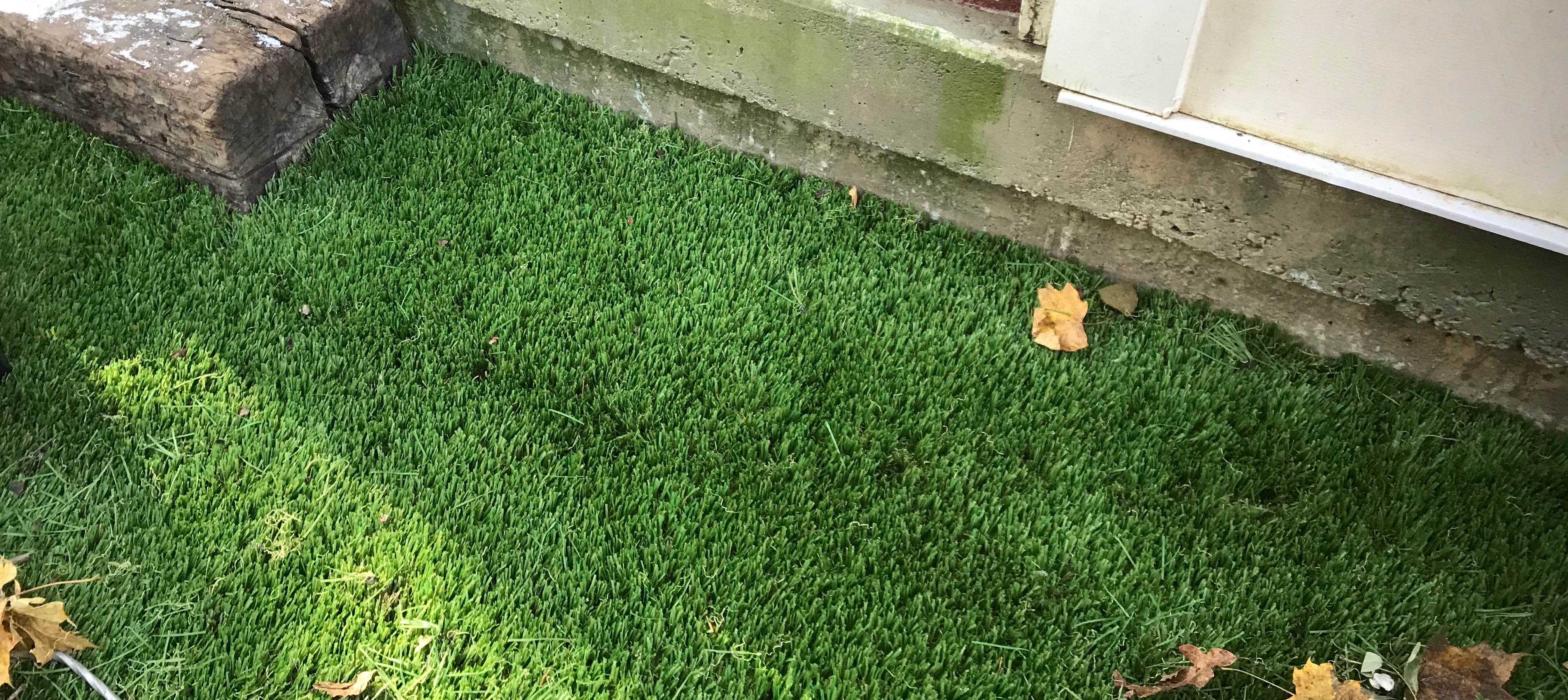
Artificial turf repair is almost always the smarter call before you start pricing full replacement. A seam that's separated three inches in one corner doesn't mean the entire yard is done. A burn spot from a grill coal near the fence doesn't mean you replace two thousand square feet of otherwise solid turf. A section the dog has dug through along the gate line is a repair problem, not a replacement problem. Turf Installation of Houston makes this call honestly — we'll tell you what's repairable and what isn't, and we won't push replacement on a yard that still has a decade of life in it.
East Houston and east Pasadena turf installations face specific damage patterns that we see regularly. The temperature swings between Houston's winter cold fronts and July heat cause adhesive stress at seams over time — seams that were well-installed will eventually need attention in this climate if they're placed in full sun exposure. Yards with large dogs develop predictable wear patterns along fence lines and in the corners where pets run circuits. Grill use near turf edges results in ember burns, particularly in smaller East End backyards where the grill sits close to the lawn. And East Houston's frequent heavy rainfall events expose any drainage problem that was latent in the original installation — pooling that wasn't visible in dry years shows up clearly after a wet Gulf season.
We handle all of these. Seam separation is repaired using commercial-grade adhesive and backing tape appropriate for Texas temperature cycling. Burned sections are cut out, the base is inspected, and matching turf is patched in with clean, near-invisible seams. Pet-damaged areas are removed, the soil underneath is treated for odor and contamination, and new turf is installed with reinforced anchoring along the damage zone. Drainage failures are diagnosed at their actual source — whether that's infill compaction, base settlement, or backing deterioration — and corrected accordingly.
We source matching turf materials when color and pile matching matters, and we're realistic about aging: if your turf has been in the east-side sun for eight years, a perfectly new-looking patch isn't achievable, but a functional, acceptably matched repair is. We explain what the finished result will look like before we do the work, not after.
What the work includes
- Seam repair for Texas heat cycling: Seam adhesive and tape specified for Houston's temperature range — from winter cold fronts to July heat — using commercial-grade materials that don't degrade as rapidly as standard repair products.
- Burn and ember damage patching: Grill and fire pit ember burns are a common East End repair. We remove the damaged section, inspect the base for heat penetration, and patch with matched material and clean seam work.
- Pet damage restoration: Dog-dug areas along fence lines in Pasadena and East Houston yards are cut out, soil underneath is treated, and replacement turf is installed with reinforced anchoring that discourages repeat digging in the same zone.
- Drainage failure correction: East Houston clay soil creates base settling issues over time. We diagnose whether drainage problems come from infill compaction, base settlement, or backing failure and correct at the source.
- Edge and perimeter re-anchoring: Lifted edges along concrete walks, fence lines, and landscape borders are re-anchored with fasteners and adhesive appropriate for the perimeter material. Tripping hazards are corrected promptly.
- Tear and puncture repair: Sharp objects, equipment contact, and accidental damage leave clean cuts in turf that can be patched with precision. We match fiber direction and pile height to minimize visibility.
- Color and age matching: We're realistic about matching aged turf — East Houston sun fades turf gradually over years, and we explain what the repair will look like relative to the surrounding material before starting work.
- Warranty-backed repair work: Repair work performed by Turf Installation of Houston carries a workmanship guarantee. We document repairs for customer records.
Installation and project process
- Step 1
Damage Assessment and Root Cause Evaluation
We inspect the damaged area and determine what actually caused the problem — not just what it looks like on the surface. A seam that separated might be an adhesive failure, a base settlement issue, or a foot-traffic pattern we can work around. Identifying the cause is what determines whether the repair holds.
- Step 2
Repair Plan and Material Sourcing
We develop the specific repair approach and source matching turf if a patch is needed. For seam repairs, we specify adhesive and backing appropriate for the existing installation type and the east-side climate. We confirm the scope and cost before work begins.
- Step 3
Damage Area Preparation
Damaged turf is removed cleanly. The base underneath is inspected — for burn damage, we check heat penetration; for pet-dug areas, we treat the soil for contamination; for drainage failures, we expose and evaluate the aggregate base. The repair area is ready before new material goes in.
- Step 4
Repair Execution
The repair is performed using the method appropriate for the damage type — seam adhesive and tape, patch installation with matched turf, edge re-anchoring, or base correction with drainage improvement. We use the same installation standards for repairs that we use for new installations.
- Step 5
Seam Integration and Grooming
Patch edges are seamed and glued to the surrounding turf. Fiber direction is matched across the seam. Infill is applied to the repaired area and distributed to match surrounding depth. The area is groomed to blend the repair with the existing surface.
- Step 6
Inspection and Repair Documentation
We walk the repaired area with you, confirm the result meets expectations, and document the work. For drainage repairs, we verify flow before leaving. Repair documentation includes what was done, materials used, and our workmanship guarantee terms.
Frequently asked questions
Can you repair turf that another company originally installed?
Yes. We assess the existing installation type, identify what product and base system is in place, and repair accordingly. If the original installation has underlying problems that are causing repeated damage — improper base grading, wrong adhesive specification, inadequate anchoring — we'll identify those and address them as part of the repair scope.
What causes seam separation in East Houston yards?
The primary cause in this climate is thermal cycling. Houston's temperature range — from freeze events in January to sustained 95-plus days in July and August — causes expansion and contraction that stresses seam adhesive over time. Seams placed in full sun in east-facing yards take more of this stress. Heavy foot traffic across seam lines accelerates it. We repair using adhesive and tape rated for this temperature range.
How much do turf repairs typically cost?
Repair cost depends on the type and extent of damage. Minor seam repairs may run $200 to $400. Patch repairs for burn damage or pet-dug areas vary by the size of the patch and whether the base needs attention. We assess the damage first and give you a repair estimate before we start work — no surprises on the bill.
How quickly can you respond to repair needs in the East End?
For most repair requests in the East Houston corridor, we can assess within a few business days and schedule the repair based on scope and material availability. Edge lifting and seam separation that create safety hazards — tripping edges on commercial properties or across yard areas with active children — get priority scheduling.
Is it worth repairing older turf or should we just replace it?
If the turf fibers are still intact, not brittle, and the damage is localized, repair is almost always the better value. We make this call honestly — if the surrounding turf is degraded enough that repair won't hold or won't look acceptable, we'll tell you that rather than charge you for a repair that doesn't solve the problem.
Can pet damage along fence lines be permanently fixed?
We can repair the damaged section and reinforce the anchoring in the dig zone, which stops most dogs from repeating in the same spot — they lose access to the soil smell that triggers digging. For persistent diggers, we can also discuss buried barrier options at the perimeter that make the fence line dig-resistant. We'll be straight with you about what level of deterrence is realistic.
How long does a typical repair take?
Most single-area repairs are completed in a few hours during one visit. Larger repairs involving base correction or multiple damage zones may take a full day. We give you a time estimate when we confirm the repair scope so you know what to expect.