
Overview
How this service fits Houston-area turf projects.
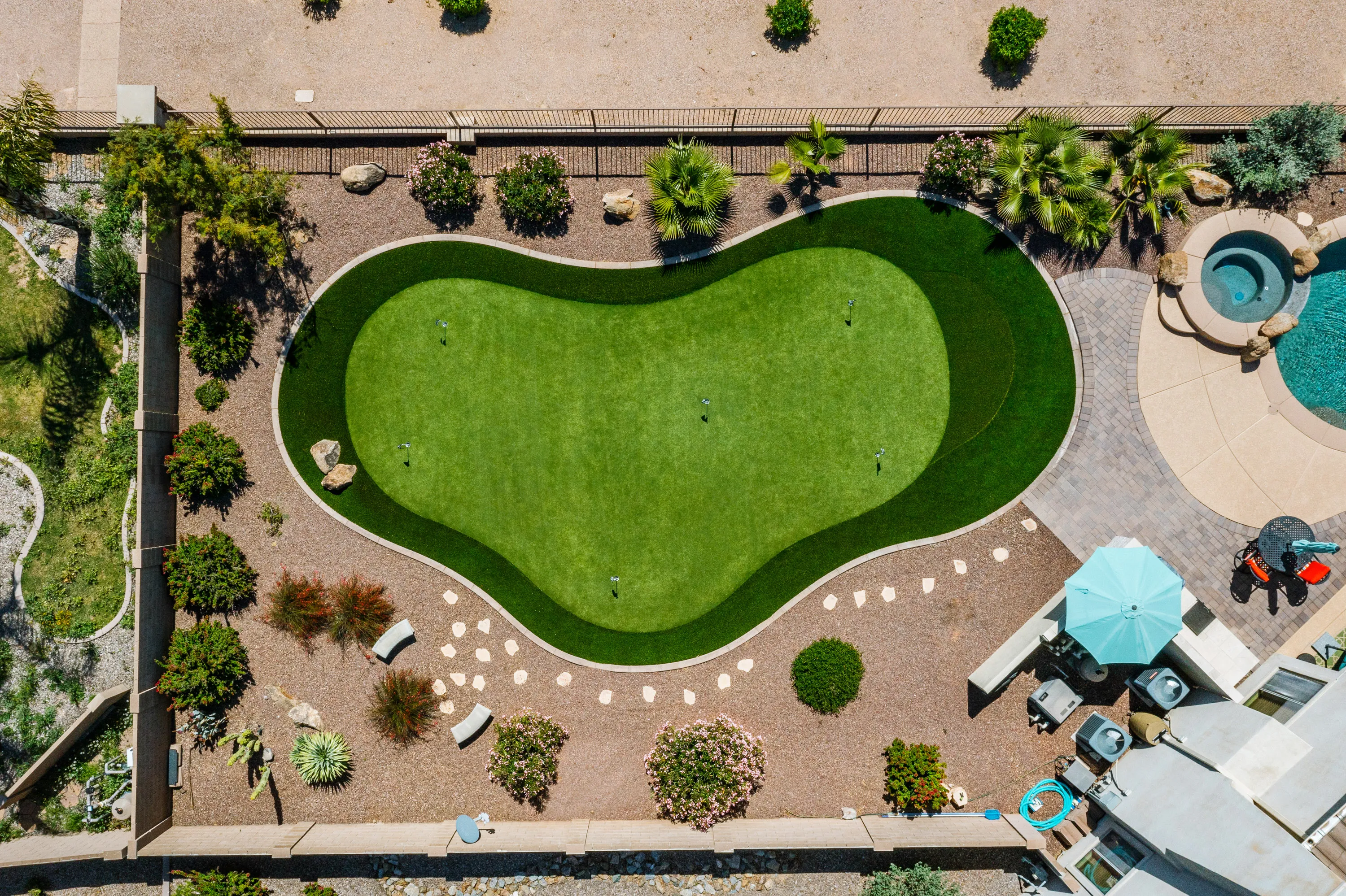
A backyard putting green is a specific installation — not a landscape project, not a recreation area with standard turf. The surface has to deliver consistent ball roll, hold its contours without settling, and drain quickly enough to be playable within hours of a Houston thunderstorm. Getting those results requires the right materials, precise base contouring, and installation experience with golf surfaces specifically. Turf Installation of Houston builds putting greens that play the way they're supposed to.
East Houston and east Pasadena homeowners interested in a backyard green are working with yards that have their own characteristics: clay soil that causes base settling if not properly addressed, mature tree root systems in older East End neighborhoods that affect subgrade work, and the intense east-side sun exposure that accelerates fiber degradation in low-quality putting turf. We build around those realities rather than ignoring them.
The base for a putting green is engineered differently than a landscape turf base. Contours and breaks — the subtle slopes that make putting practice interesting — are sculpted in the aggregate and compaction layer, not faked with the turf surface. We use laser-guided grading techniques to create precise elevation changes that translate into realistic putt breaks. The drainage system below the sculpted base handles heavy Texas rainfall events without washing out the contour work we've done.
Putting surface turf is specified separately from landscape turf. We use nylon and polypropylene golf-grade surfaces engineered for consistent ball roll speed (stimp ratings typically 9 to 12 for residential applications) with minimal seaming that could affect roll. The surface is installed with grain direction consistency across the green so ball roll behavior is predictable rather than variable.
For families in Magnolia Park, Pecan Park, and east Pasadena who want a functional practice surface in a Houston backyard, we design greens that fit the available space, work within the constraints of your yard's drainage and grade, and give you a realistic golf practice experience without requiring the maintenance demands of real putting turf. Whether you want a single-hole practice green or a multi-hole layout with a fringe chipping area, we build to your spec.
What the work includes
- Precision base contouring for real putt breaks: Contours are sculpted in the compacted aggregate base layer using laser-guided grading — the breaks are structural, not surface cosmetics, and they hold over time.
- Golf-grade putting surface materials: Nylon and polypropylene golf-specific turf with stimp ratings appropriate for the intended use, installed with consistent grain direction for predictable ball roll across the entire green.
- East Houston drainage engineering: Putting greens drain through a sub-base drainage system designed for Houston's rainfall rates — the surface should be playable within a couple of hours after a typical Gulf Coast storm system.
- Clay soil base preparation: East Houston clay is excavated and replaced with appropriate aggregate before any contouring work begins. Putting greens installed over improperly prepared clay base will settle and lose their contour within a season or two.
- UV-stabilized materials for east-side sun: East-facing Houston yards get intense sun exposure from early morning through midday. Putting turf is UV-stabilized to resist fading and fiber degradation in direct Texas sun.
- Multiple-hole and fringe design options: We build greens with two, three, or four holes with varied pin positions, add fringe turf around the perimeter for chipping practice, and integrate sand bunker areas for short game practice.
- Professional cup and flag installation: Regulation hole cups are set in the base with proper surround support. Interchangeable pin positions allow varied practice routines. Flag systems are installed to complete the playing experience.
- Landscape integration: Putting greens in East End and Pasadena backyards are designed to transition cleanly to surrounding turf, concrete decking, landscape beds, or existing hardscaping without awkward edges.
Installation and project process
- Step 1
Golf Lifestyle and Space Consultation
We talk through your golf interest — skill level, how you practice, what you want to work on — and evaluate your available space. East Houston backyards vary considerably in size and layout. We identify what's realistic for your yard, what contour features work in the available square footage, and what the green will look like relative to the rest of your outdoor space.
- Step 2
Design, Spec, and Proposal
We develop a design drawing with contours, hole positions, fringe layout, and any additional features. Turf surface is specified for the desired playing speed. Drainage approach is determined by your yard's grade and soil conditions. You receive a written proposal with all specifications and pricing before work starts.
- Step 3
Clay Soil Excavation and Base Preparation
East Houston clay is excavated to appropriate depth — typically deeper than for landscape turf because the base tolerances for a putting green are tighter. Excavated clay is removed from the property. Drainage layer and primary aggregate base are installed and compacted as the foundation for contouring work.
- Step 4
Precision Contour Sculpting
This is the step that determines whether your green plays like a real putting surface. Contours — slopes, breaks, swales — are sculpted in the base material using laser-guided equipment and hand finishing. Elevation changes are measured and verified against the design before any turf goes down.
- Step 5
Drainage System and Stabilization Layer
Drainage channels, perforated pipe, and discharge routing are installed before the final compaction layer goes on. The drainage system is sized to handle Houston's rainfall rates — a green that pools water after every afternoon storm isn't usable for the golf practice it was built for.
- Step 6
Putting Surface Installation, Cups, and Fringe
Golf-grade putting turf is installed over the contoured base with minimal seaming and consistent grain direction. Cup positions are cut and cups are set in the base. Fringe turf is installed around the green perimeter. The surface is groomed and prepared for play. We confirm the green plays as designed before project closeout.
Frequently asked questions
How much space do I need for a backyard putting green in East Houston?
We can design a functional putting green in as little as 200 to 300 square feet — enough for a couple of holes and some varied putt lengths. More interesting multi-hole designs work best in 500 square feet or more. East End and Pasadena backyards vary considerably, and we can work with irregular shapes and partial shading. The consultation is where we determine what's achievable in your specific yard.
How fast will the green play?
Playing speed depends on turf selection and infill depth. Most residential greens we install play in the 9 to 11 stimp range — comparable to a well-maintained country club putting green. Faster surfaces (11 to 13) are achievable with certain products and require more precise maintenance. We discuss this during design and set your green to the speed that matches your skill level and goals.
Will the contours hold up through Houston's wet seasons?
When the base is properly prepared — clay removed, aggregate installed to correct depth, drainage system functional — contours hold through Houston's wet and dry cycles. The problem we see with failed greens is clay left in the base, which expands with rain and collapses in dry spells, distorting the contours. We address that correctly in the excavation phase.
Can I add a chipping area and sand bunker?
Yes, and we recommend it for a complete short game practice facility. A chipping fringe around the green perimeter using slightly higher-pile turf gives you approach-shot practice from different angles. Sand bunkers require some additional base work and are sized based on available space. We design these features as part of the initial green layout.
How much does a backyard putting green cost?
Cost depends on size, the number of holes and contour complexity, drainage requirements, and whether you're adding fringe or bunker features. We provide itemized proposals after the site visit and design consultation so you understand exactly what you're paying for. We don't give phone quotes for putting greens — the site-specific factors matter too much for an accurate number.
How long does installation take?
Most residential putting green installations in the East Houston area take seven to twelve business days from start to playable surface. Larger installations or those with significant base challenges — deep clay removal, complex drainage requirements — may take two weeks. We provide a project-specific timeline during the design phase.
What maintenance does a putting green require?
Putting greens need more attention than landscape turf to maintain consistent playing performance. Weekly debris removal, monthly grooming with a specialized turf rake to keep fibers upright, and annual professional maintenance to check infill levels, seam condition, and drainage. We can schedule annual maintenance at project closeout.